 Skip to content



Why Nighttime Is the Most Dangerous Time for Falls (and How to Protect Yourself)
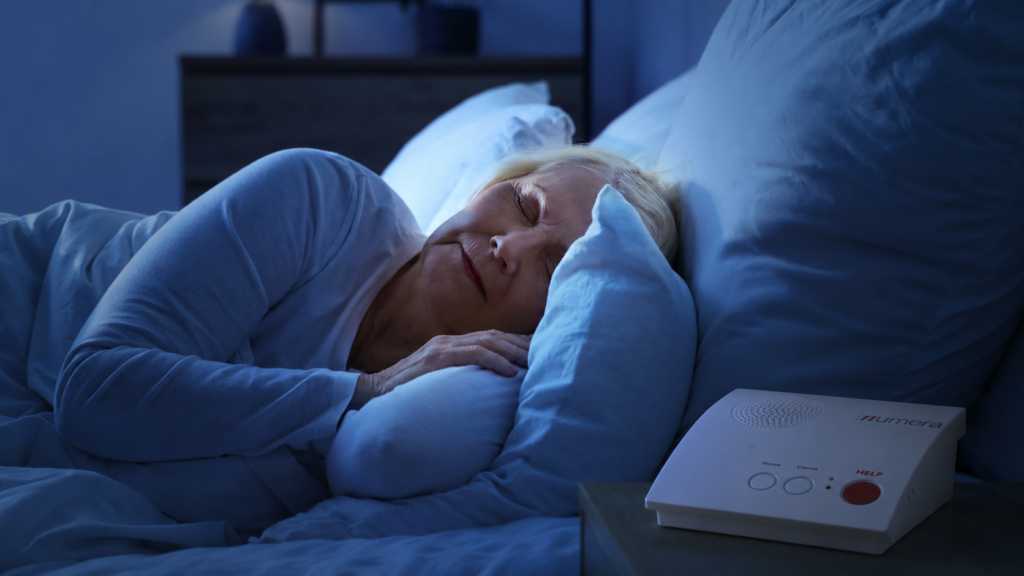
When we think about home safety, we often picture everyday activities: cooking, gardening, climbing stairs, or cleaning. However, a large proportion of incidents and calls to our monitoring center occur at night or in the early morning hours.
The transition from sleep to wakefulness, combined with darkness, creates a mix of risks that is often underestimated. Here’s why nighttime requires special attention and how to adjust your habits so you can sleep soundly.
The Culprits in the Middle of the Night: Darkness and Sudden Drops in Blood Pressure
Why are falls at night so common? The answer lies in three simple physical and environmental factors:
- Sudden drop in blood pressure: When you stand up quickly after lying down for several hours, blood pools in your legs, which can cause temporary dizziness or a loss of balance as soon as you take your first steps.
- Disorientation and fatigue: Waking up suddenly to go to the bathroom or because of a suspicious noise impairs our alertness and reflexes.
- Poor visibility: Trying to make your way through a dark room or hallway increases the risk of bumping into furniture or tripping over an unseen obstacle.
The Classic Mistake: Leaving the Device on the Nightstand
This is the most common habit: quickly taking off your bracelet or pendant before going to bed and placing it on the nightstand.
Imagine the scene: you wake up, slide off the edge of the bed, or lose your balance as you get up. If you fall to the floor—even just two or three feet from your bed—the nightstand is suddenly out of reach. You find yourself stuck on the floor, unable to reach your call button.
The solution? Keep it on you or within easy reach:
- Our emergency buttons are lightweight, hypoallergenic, and designed to be worn even while you sleep.
- If you really prefer not to wear it on your wrist or around your neck while you sleep, attach it to the side of your mattress, slip it under your pillow, or hang it directly from the bed frame in a spot you can reach without having to sit up.
3 Quick Tips for a Safe Night’s Sleep
To round out the protection provided by your medical alert system, here are three simple changes you can make in the bedroom:
- Take your time: When you wake up, don’t jump out of bed. Get into the habit of sitting on the edge of the bed for 30 seconds to a minute, moving your feet around a little, to give your blood pressure time to stabilize before standing up.
- Light the way: Install automatic motion-sensor night lights under the bed, in the hallway, and in the bathroom. As soon as you step out of bed, the path gently lights up without dazzling you.
- Clear the area: Make sure there are no lamp cords, slippers, or corners of bedspreads lying around right where you step when you get out of bed.
The night should be a time of complete rest, free from stress. By combining a well-lit environment with the reassuring presence of your emergency button within easy reach, you can be sure to get help in a matter of seconds—even at 3 a.m.